Lessons Learned from Punch
Mar 03, 2026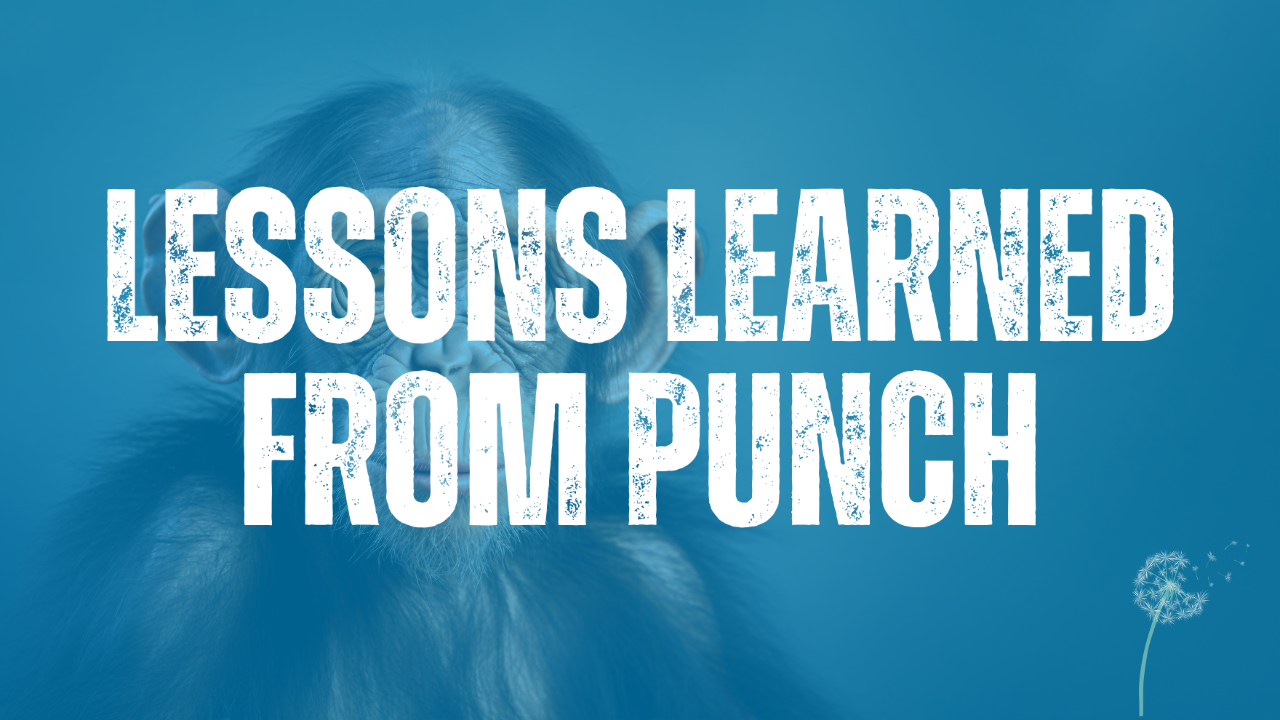
Punch was not born wild. He was made that way.
He was a monkey taken from where he belonged. Removed from what was natural. Then labeled for how he reacted to the removal.
Abandoned, ostracized, left to fend for himself.
And when he struggled, when he acted out, when he defended his small piece of ground, the narrative became about his behavior. Not his history.
We do this. We do it with animals and we do it with people.
Punch’s story is not only about a monkey. It is about what happens when belonging is interrupted and survival becomes identity.
When someone is separated from family, culture, language, land, or safety, they adapt. Adaptation is not pathology…it is intelligence and it is resilience.
Yet the world often punishes the very behaviors it forced into existence.
We have seen this with Indigenous communities pushed from ancestral lands and then judged for the generational trauma that followed.
We have seen it with Black Americans who endured enslavement and segregation and are still measured against systems never built for their flourishing.
We have seen it with Japanese Americans placed in internment camps during World War II, then expected to quietly assimilate as if the rupture never occurred.
We have seen it with LGBTQ+ individuals rejected by families, faith communities, and even the government that protects them, then criticized for guarding their hearts.
We have seen it with immigrants who arrive with little, navigating language barriers and suspicion, then labeled outsiders for protecting their own.
We have seen it with people living with disabilities who are excluded from access and opportunity, then deemed incapable.
Abandoned. Ostracized. Left to fend for themselves.
Punch did what any living being would do. He survived.
Survival can look sharp, guarded, and loud, but beneath survival is a nervous system that once knew safety.
The question is not, “What is wrong with him?”
The better question is, “What happened to him?”
This shift changes everything.
In leadership, in community, in relationship, the invitation is the same. Move from judgment to curiosity…from reaction to understanding.
A leader does not ignore behavior. A leader looks beneath it.
When you encounter someone who seems defensive, distant, aggressive, withdrawn, ask what story shaped that stance…ask where belonging was broken.
Punch’s life reminds us that dislocation has consequences, that isolation changes chemistry, andt hat rejection leaves marks.
It also reminds us that resilience is not prettiness. It is persistence.
There are people all around us carrying histories we cannot see. People who learned early that safety was conditional. People who were told, directly or indirectly, that they did not belong.
And yet they are still here. Still contributing, still striving, and still surviving.
The work now is not to tame the wounded.
It is to build environments where they no longer have to defend.
Less labeling and more listening.
Less exile and more inclusion.
The lesson from Punch is simple and difficult at the same time.
Belonging is not a luxury…it is a requirement for wholeness.
When we create spaces where people are seen before they are judged, supported before they are corrected, and understood before they are defined, something shifts.
Defensiveness softens, guardedness eases, and humanity returns to the room.
Punch was not the problem.The rupture was.
And when we learn to see rupture instead of reaction, we begin to lead differently.
We begin to love differently, and we begin to repair what abandonment once broke.