When “I’m Sorry” Isn’t Enough
Dec 18, 2025
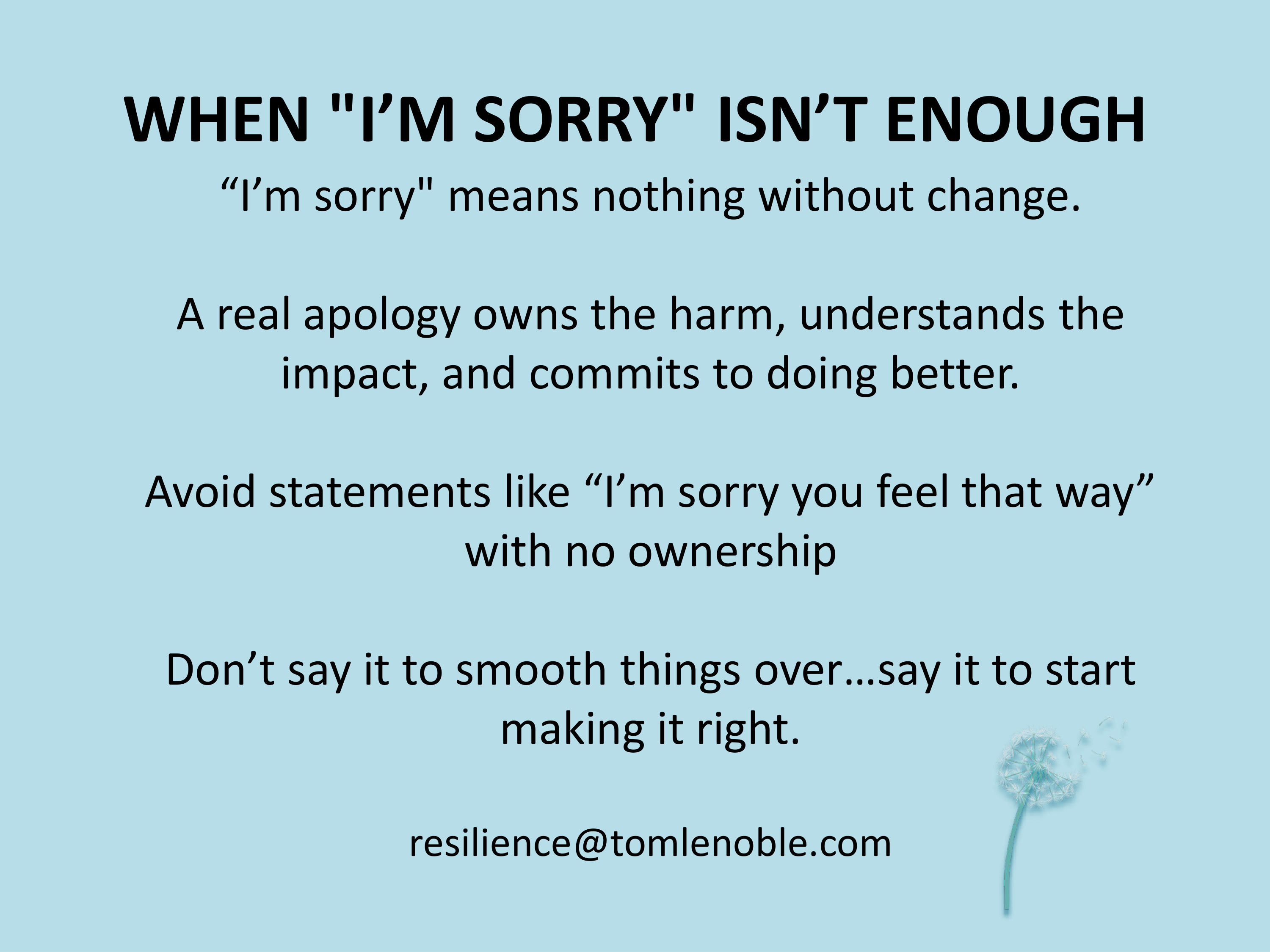
We have all been on both sides of an apology—the one offering it, and the one deciding whether to accept it. “I’m sorry” can be powerful, but it can also be hollow.
The truth is, without change, “I’m sorry” is just air moving through the room. It might ease tension for a moment, but it does not heal the wound.
A true apology has three parts:
- Ownership – Acknowledging what happened and taking full responsibility. No excuses, no deflection.
- Understanding – Recognizing the real impact on the other person, not just your intention.
- Action – Making a commitment to change your behavior so the harm does not happen again.
And here is one more critical point: avoid statements like “I’m sorry you feel that way.” That is not an apology—it is a sidestep. It shifts the focus away from your actions and places it on the other person’s feelings, with no ownership or accountability.
An apology without action is like planting a seed and never watering it. You cannot expect growth without care.
Sometimes people overuse “I’m sorry” as a quick fix to smooth over discomfort, but that is not reconciliation. That is avoidance. Other times, “I’m sorry” is offered when it is not even needed—a habit rather than a healing act.
The art of apology is about rebuilding trust, brick by brick. It is showing, through consistent choices, that your words mean something.
Before you say “I’m sorry” again, pause and ask yourself:
- Am I prepared to do what it takes so this apology is not needed again?
- Will my actions tomorrow make my words today believable?
- Is an apology appropriate—or just automatic?
Because in the end, it is not the “I’m sorry” that matters most. It is what you do next.
For use at work, home, and on the playground.
— Tom LeNoble